Are you thinking of installing a key box to facilitate your short-term rentals in Nice? Be careful: since October 2023, the municipality has tightened its regulations to better control this device, which is very popular with Airbnb owners.
Rules for installing a key box in Nice
Banned on streets and street furniture
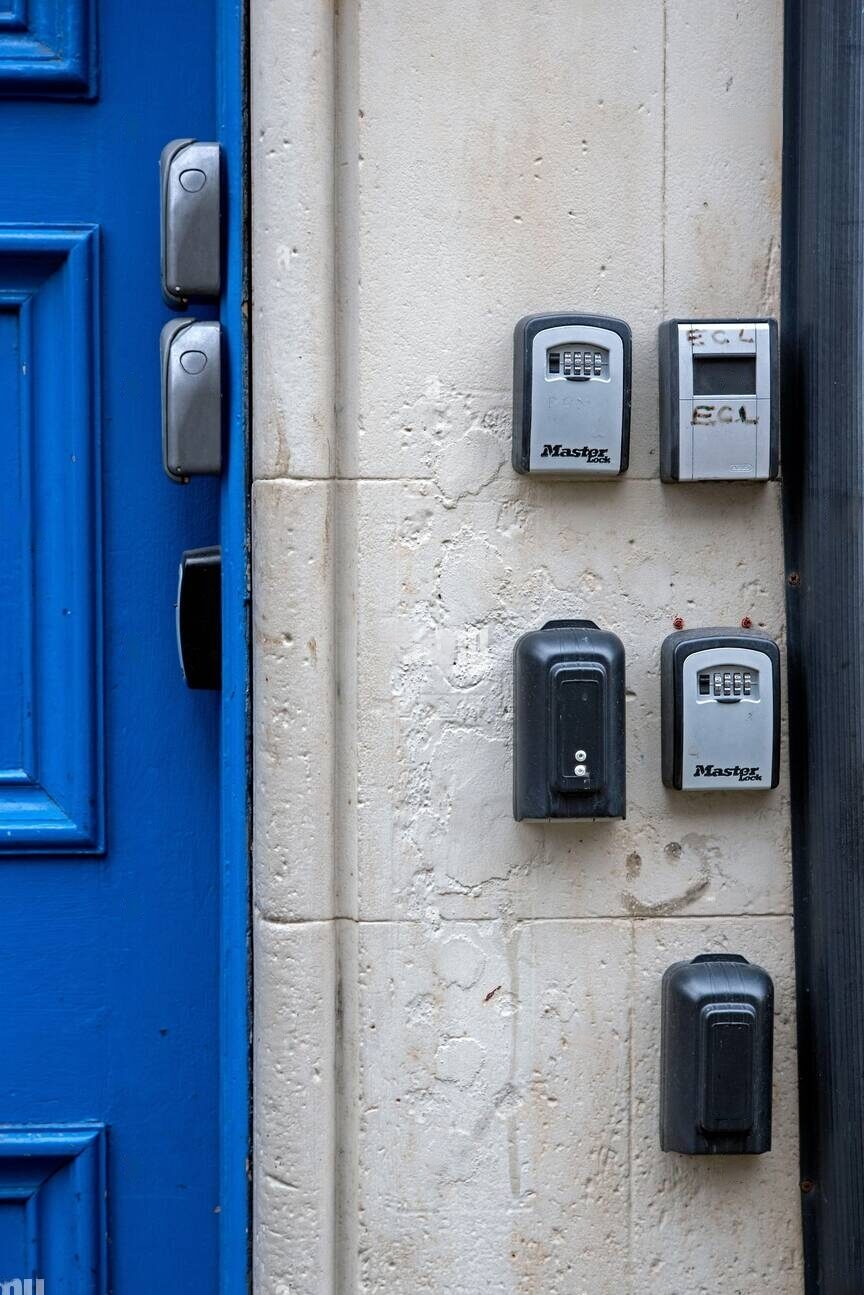
The golden rule: do not attempt to attach your key box to a lamppost, pole, or any other element of Nice's street furniture. This is now strictly prohibited by municipal order, subject to penalties.
Gone are the days when you could attach a key box to a street lamp, a tree grill, or an electrical cabinet to facilitate access to your Airbnb. Even if this may seem practical, city hall has decided to crack down on this practice, deemed unsightly and conducive to unregistered rentals.
In short, if you were counting on Nice's street furniture to facilitate your short-term rentals, you will need to find another solution. City hall is serious about preserving its public space and intends to enforce its order to the letter.
In a co-ownership building, it requires discussion
In buildings subject to co-ownership status, it is better to proceed with caution.
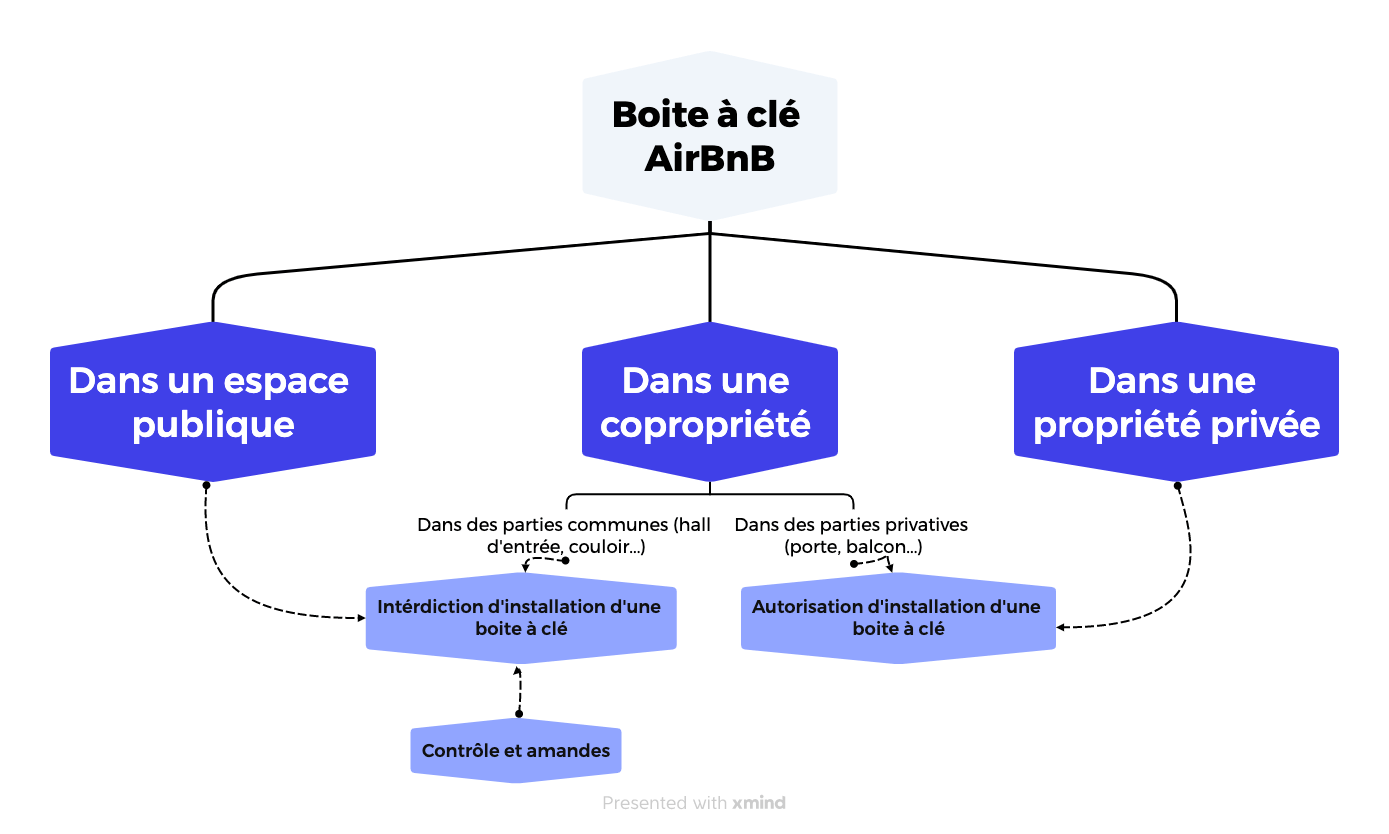
If you opt for a common area (entrance hall, corridor...), a vote at the general assembly will be indispensable, even if the regulations authorise furnished tourist rental. You will need to convince the majority of co-owners of the merits of your approach at a general assembly.
On the other hand, you have full freedom to equip your private areas (door, balcony...). As long as you do not encroach on common areas, you can attach your key box to your front door, balcony or window.
Permitted on individual private property
Your property rights allow you to place a key box wherever you wish: gate, facade, garden... As long as you remain within your property boundaries, you are not at risk. A welcome flexibility for Airbnb owners.
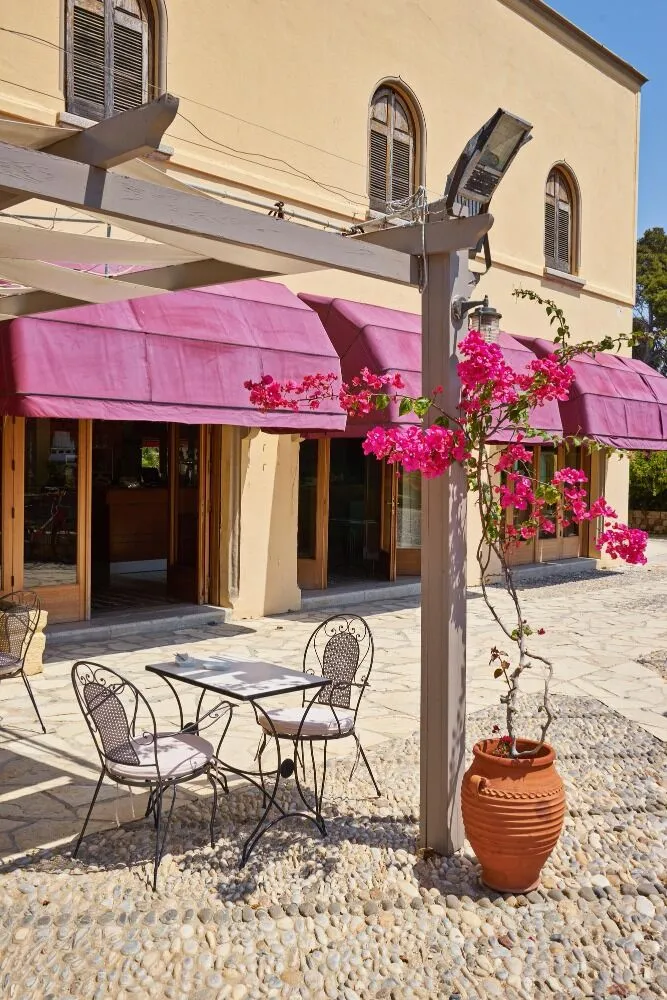
Attach it to your gate, conceal it in a climbing plant, integrate it into your letterbox... Some particularly inventive owners have even turned their key box into a true decorative object: tucked into a flower planter, camouflaged behind a shutter or customised in the house's colours...
What is your property's potential?
Get a free, no-commitment rental audit from our on-the-ground team.
3 reasons behind this decision by Nice's mayor
But why so many restrictions on key boxes? Behind this new regulation, Nice city hall has a clear objective: to limit short-term rentals, which have been proliferating in an uncontrolled manner in recent years.
1. Fighting the housing crisis in Nice
The first reason cited by the mayor: the housing crisis. With nearly 12,000 Airbnb listings recorded in Nice (36 listings per 1,000 inhabitants), the city has one of the highest rates in France. A figure that has been constantly increasing for several years.
As a result, numerous apartments are being diverted from conventional rental to tourist rental platforms. According to city hall estimates, nearly 5.5% of Nice's rental stock is being removed from the traditional market. A net loss for residents, who struggle to find housing in a city where prices continue to soar.
2. Preserving residents' quality of life
Another grievance highlighted: the nuisances generated by short-term rentals. Night-time parties, constant comings and goings, damage to common areas... Residents are fed up with these transient tenants who disturb their peace.
By making key box installation more difficult, city hall aims to reduce these unregistered rentals and preserve the quality of life of Nice's residents.
3. Aesthetic concerns raised by the city of Nice
By banning them from public space, city hall wants to preserve the architectural identity of the city and avoid a uniformisation of building entrances. An aesthetic concern that ties in with broader preoccupations about heritage preservation.
A question about your project?
Talk directly with your local Vesna agent. Available, responsive, no commitment.
Consequences of non-compliance
Increased inspections and how they work
Municipal police have been instructed to track down illegal key boxes during daily patrols through the city streets. Reports from residents will also be taken into account to target sensitive areas.
If a disputed device is found, officers affix a formal notice sticker directly to the device, ordering the owner to remove it within 15 days.
After this deadline, they will return to check whether their order has been complied with.
If the key box is still in place, municipal police officers will remove it themselves before placing it in their lost property storage. The owner will then be invited to collect it, with proof of identity and proof of ownership. A burdensome process designed to discourage repeat offences.
But inspections will not stop there. City hall also plans to target Airbnb listings that explicitly mention the presence of a key box, in order to trace the owners. Officers will then be able to verify the installation's compliance on site and issue fines to offenders.
Fines
According to the municipal order, installing a key box on public space will be subject to a fine of up to 450 euros.
A dissuasive amount, which can be doubled in the event of repeat offences. Enough to make the most reluctant Airbnb landlords think twice, for whom the game may quickly not be worth the candle. Especially since these fines will be added to any penalties for failure to obtain a change-of-use authorisation or city hall declaration.
3 alternative solutions: pros and cons
Faced with the ban on key boxes in Nice's public space, Airbnb owners will need to be creative about how they welcome their guests. Fortunately, several legal alternatives exist, each with its own advantages and disadvantages.
1. In-person key handover
The simplest solution is to hand keys directly to tenants upon their arrival. An effective way to make direct contact with them, show them around the property and give them some practical tips about the neighbourhood.
Pros:
- Human contact and personalised welcome
- Opportunity to verify tenant identity and the condition of the property
- Possibility of charging cleaning fees or collecting a deposit
Cons:
- Need to be available for every tenant arrival and departure
- Time and logistical constraints, especially for non-resident owners
- Risk of waiting or delays if tenants change their plans
2. Using specialist agencies
To relieve themselves of the constraints of key handover, some owners turn to agencies specialising in Airbnb concierge services. For a commission, these professionals take care of welcoming tenants, handing them the keys and even managing property maintenance.
Pros:
- Full delegation of welcome and rental management
- Extended availability and flexible hours for tenants
- Additional services possible (cleaning, laundry, maintenance...)
Cons:
- Non-negligible cost, which eats into rental profitability
- Loss of direct contact with tenants and control over the property
- Need to find a reliable and responsive agency
3. Secure lockers at partner businesses
Finally, an intermediate solution consists of leaving keys in a secure locker at a partner business (café, convenience store, dry cleaner...). Tenants can then collect them autonomously, in exchange for a code or proof of identity.
Pros:
- Flexible hours for key collection
- Moderate cost, often a flat rate regardless of the length of stay
- Contribution to the local economy by supporting local businesses
Cons:
- Need to find a business willing to partner
- Risk of keys being lost or not returned by tenants
- No way to check the condition of the property between stays
Read also